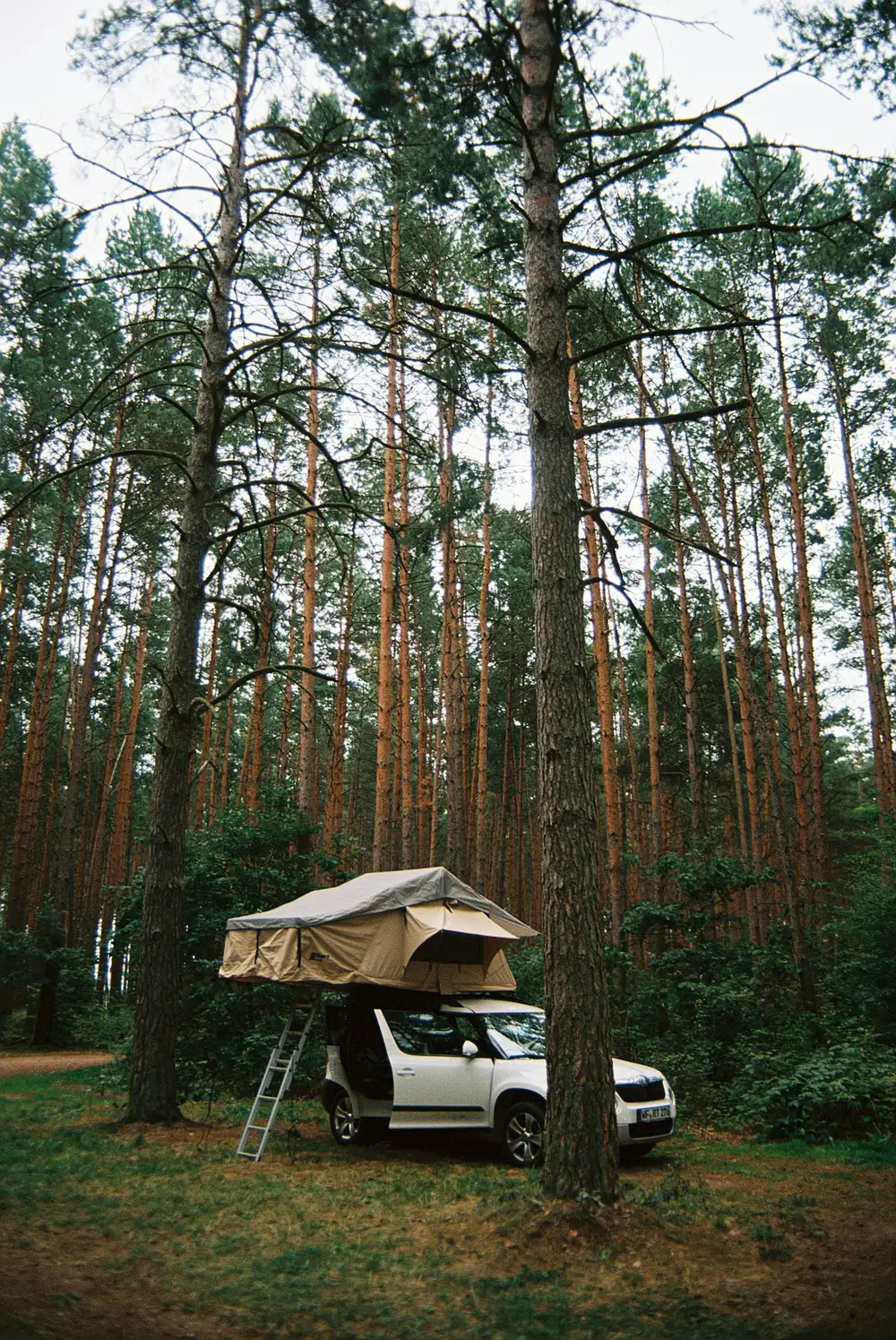
The rooftop tent versus ground tent debate comes down to how often you move camp and how much you value getting off the ground. A rooftop tent like the iKamper Skycamp 3.0 Rooftop Tent or the softshell ROAM Adventure Co. Vagabond XL Rooftop Tent deploys in minutes onto a mattress that is always made, while the budget hardshell Tuff Stuff Overland Alpha Series Rooftop Tent brings the rooftop experience down in price. A ground tent is cheaper, lighter, and can stay pitched while you drive away. Knowing where each one genuinely wins saves you from a four-figure purchase you do not need.
Quick answer
A rooftop tent is worth it for overlanders who camp 15 to 40-plus nights a year and move camp often, thanks to minute-fast setup, a built-in mattress, and protection from ground water, mud, and critters. A ground tent wins on cost, weight, and the ability to stay pitched at camp while you drive off to explore.
This guide contains affiliate links. TrailBaseGear may earn a commission at no cost to you.
Where rooftop tents win
Setup speed is the headline. A hardshell iKamper Skycamp 3.0 Rooftop Tent opens in under a minute, and even a softshell folds out in a few minutes, compared with pitching, staking, and leveling a ground tent on whatever surface you find. The mattress is permanently made up inside, so arriving at camp after dark means you climb a ladder and go to sleep rather than hunting for a flat spot and threading poles by headlamp.
Being elevated solves a list of ground-tent problems at once: rainwater runoff cannot flood the sleeping area, mud and dust stay below you, and ground-dwelling critters are not your bunkmates. The robust structure of a rooftop tent also insulates better against cold and wind than a thin ground tent, and the thick built-in mattress sleeps far better than an inflatable pad on uneven dirt.
Field reference / File TBG-054 rooftop tents

iKamper Skycamp 3.0 Rooftop Tent
Hard-shell pop-up tent that opens fully in under 60 seconds, sleeps four, and includes an insulated floor panel for three-season camping.
Where ground tents win
Price is the clearest gap. Quality ground tents run roughly 100 to 500 dollars, while rooftop tents range from about 1,000 to over 4,000 dollars. For an occasional camper, that difference buys a lot of other gear. Ground tents are also lightweight and pack small, adding no roof weight and no aerodynamic drag, so they do not cost you fuel economy on every highway mile the way a permanently mounted rooftop tent does.
The flexibility advantage is real too. A ground tent stays pitched at your site while you take the vehicle out to explore, run for supplies, or hit a trailhead. A rooftop tent has to be folded up every time you drive away and set back up when you return, which is a genuine friction point if you use your camp as a base and move around during the day.
The cost and roof-load reality
A rooftop tent is not just the tent cost. It mounts to a rack, so factor in a Front Runner Slimline II Roof Rack or equivalent if your factory crossbars cannot handle the dynamic load. A rooftop tent weighs 90 to 150 pounds, and most factory crossbars are rated for about 150 pounds of dynamic load while driving, which puts heavier hardshells right at or over the limit. Check your vehicle dynamic rating before buying any rooftop tent.
If the iKamper price is the sticking point but you still want the rooftop experience, the Tuff Stuff Overland Alpha Series Rooftop Tent delivers hardshell construction and quick deployment at roughly a third of the Skycamp price, and the softshell ROAM Adventure Co. Vagabond XL Rooftop Tent trades a slightly longer setup for more interior room per dollar. These bring the entry cost much closer to a premium ground-tent-plus-gear setup.
Field reference / File TBG-032 roof racks storage

Front Runner Slimline II Roof Rack
The most accessory-compatible modular roof rack on the market, with a low-profile laser-cut steel platform and direct-bolt fitment kits for hundreds of vehicle models.
Field reference / File TBG-019 rooftop tents
Tuff Stuff Overland Alpha Series Rooftop Tent
A hardshell rooftop tent with a quick-deploy gas strut opening, aluminum shell, and pop-up design at a price well below iKamper.
Field reference / File TBG-060 rooftop tents
ROAM Adventure Co. Vagabond XL Rooftop Tent
A softshell rooftop tent with an aluminum extrusion frame, 600D ripstop canvas, and a generous interior that sleeps two adults comfortably.
The nights-per-year decision
The honest deciding factor is frequency. The sweet spot for a rooftop tent is roughly 15 to 40-plus nights a year with frequent camp moves, where the daily time saved on setup and the comfort of an always-made bed compound into a clearly better experience. Frequent dispersed campers and expedition-style travelers who relocate often get the most value.
For occasional car campers, budget travelers, or anyone who mostly stays at developed campgrounds with flat sites, a rooftop tent is usually not worth the cost, weight, and fold-up friction. If you are leaning rooftop, compare the full lineup at /best/rooftop-tents/ and confirm your rack and load rating first so the tent you buy actually fits your vehicle safely.
Field reference / File TBG-054 rooftop tents
iKamper Skycamp 3.0 Rooftop Tent
Hard-shell pop-up tent that opens fully in under 60 seconds, sleeps four, and includes an insulated floor panel for three-season camping.
Field reference / File TBG-060 rooftop tents
ROAM Adventure Co. Vagabond XL Rooftop Tent
A softshell rooftop tent with an aluminum extrusion frame, 600D ripstop canvas, and a generous interior that sleeps two adults comfortably.
Field reference / File TBG-019 rooftop tents
Tuff Stuff Overland Alpha Series Rooftop Tent
A hardshell rooftop tent with a quick-deploy gas strut opening, aluminum shell, and pop-up design at a price well below iKamper.
Field reference / File TBG-032 roof racks storage
Front Runner Slimline II Roof Rack
The most accessory-compatible modular roof rack on the market, with a low-profile laser-cut steel platform and direct-bolt fitment kits for hundreds of vehicle models.
FAQ
Frequently asked questions
Is a rooftop tent worth it over a ground tent?+
It depends on how much you camp. A rooftop tent is worth it for overlanders camping roughly 15 to 40-plus nights a year who move camp often, because the minute-fast setup, always-made mattress, and elevation off mud and water genuinely improve the experience. For occasional campers, budget travelers, or those staying at developed campgrounds, a ground tent at a fraction of the price is the smarter buy.
How much more does a rooftop tent cost than a ground tent?+
A lot. Quality ground tents run about 100 to 500 dollars, while rooftop tents range from roughly 1,000 to over 4,000 dollars, and that is before the roof rack a rooftop tent requires. Budget hardshells like the Tuff Stuff Alpha and softshells like the ROAM narrow the gap, but a rooftop setup is still a multiple of a ground-tent cost once you include the rack.
Can my vehicle handle a rooftop tent?+
Check the dynamic load rating of your crossbars before buying. Rooftop tents weigh 90 to 150 pounds, and most factory crossbars are rated for about 150 pounds of dynamic load while driving, which puts heavier hardshells at or over the limit. An aftermarket rack like the Front Runner Slimline II typically carries a higher dynamic rating, which is why serious builds replace factory crossbars before mounting a tent.
What is the biggest downside of a rooftop tent?+
You have to fold it up every time you drive away and set it back up when you return, so you cannot leave camp standing while you go explore the way you can with a ground tent. Rooftop tents also add roof weight and aerodynamic drag that reduce fuel economy, and the upfront cost including the required rack is far higher than a ground tent.