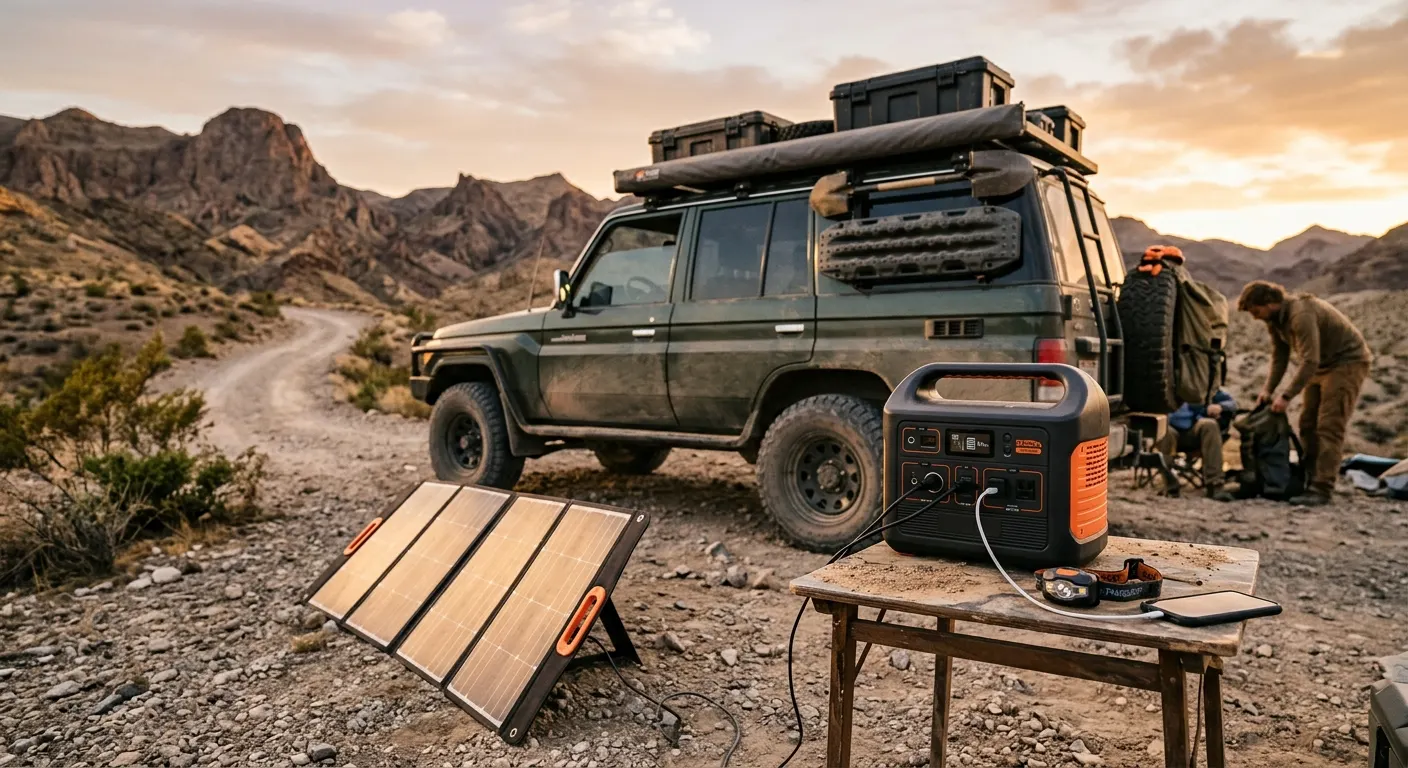
The most common electrical mistake in overlanding is plugging a compressor fridge into the starter battery and discovering it will not crank the engine the next morning. A dedicated power system is not optional once you are running a Dometic CFX3 55 Portable Compressor Fridge or similar fridge. The two main approaches are a portable power station like the Goal Zero Yeti 1500X Portable Power Station or a vehicle-mounted dual-battery system built around a Renogy 12V 100Ah Lithium Iron Phosphate Battery. The Rigid Industries E-Series 20-Inch LED Light Bar and Baja Designs S8 Pod LED Auxiliary Lights complete the electrical picture on the vehicle lighting side.
Quick answer
For overlanders who skip vehicle wiring, the Goal Zero Yeti 1500X is the fastest path to reliable overnight power for a fridge and devices. For permanent builds, a Renogy LiFePO4 battery with a DC-to-DC charger delivers a cleaner, higher-capacity solution. Add a Garmin inReach Mini 2 regardless of your power setup for remote safety communication.
This guide contains affiliate links. TrailBaseGear may earn a commission at no cost to you.
Portable power stations: no-wiring overnight power
The Goal Zero Yeti 1500X Portable Power Station holds 1,516Wh of usable energy and outputs up to 2,000W of AC power. That capacity runs a Dometic CFX3 55 Portable Compressor Fridge for approximately 24 to 30 hours depending on ambient temperature. For a one-night camp, it covers the fridge completely with power left for device charging and an LED light.
Recharging options: via the vehicle 12V outlet while driving (slow, limited by inverter draw), via AC at a campground or hotel, or via 200W of solar panels on a clear day. The solar recharge path is the one that makes a Yeti viable for multi-day remote camps without a campground.
The limitation is weight: 45 pounds means you are dedicating significant cargo space to a standalone unit. For frequent overlanders who go out more than a few times per year, a permanent dual-battery install delivers more usable capacity in a more space-efficient package.
Field reference / File TBG-082 power lighting

Goal Zero Yeti 1500X Portable Power Station
A 1,516Wh lithium power station with 2,000W AC output that runs a compressor fridge overnight and charges devices without a dedicated 12V second-battery system.
Field reference / File TBG-073 portable fridges

Dometic CFX3 55 Portable Compressor Fridge
The overlanding community's default fridge, with a best-in-class VMSO3 compressor, 55-liter interior, and Bluetooth monitoring via the Dometic app.
Dual battery with LiFePO4: the permanent solution
A Renogy 12V 100Ah Lithium Iron Phosphate Battery stores 1.2 kWh usably at 100Ah, slightly less than the Yeti 1500X on paper but more efficiently charged from the alternator via a DC-to-DC charger. Two 100Ah batteries give you 2.4 kWh total, more than the Yeti, mounted in a space that fits around the vehicle's cargo area design.
LiFePO4 chemistry delivers 4,000-plus charge cycles versus 500 for AGM batteries, meaning the Renogy battery will still be at full capacity after a decade of weekly charging. The integrated BMS protects the cells from overcharge and over-discharge, which are the primary failure modes of lithium batteries in DC systems.
The DC-to-DC charger is the critical component: it takes alternator voltage and regulates it safely for lithium chemistry, which is damaged by the variable voltage a standard alternator produces. Do not wire a lithium secondary battery directly to the alternator without a DC-to-DC charger.
Field reference / File TBG-085 power lighting
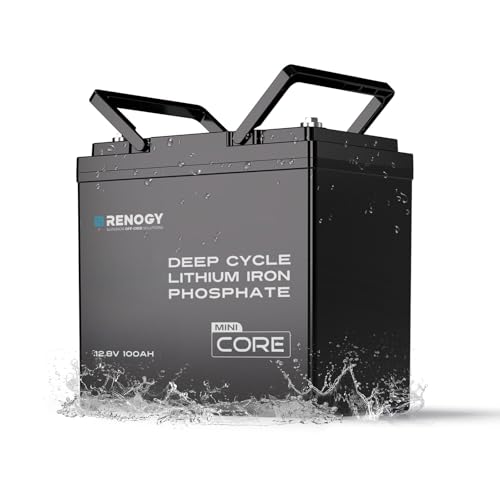
Renogy 12V 100Ah Lithium Iron Phosphate Battery
A 100Ah LiFePO4 deep-cycle battery for permanent dual-battery installations, rated for 4,000 charge cycles with an integrated BMS.
Vehicle lighting: light bars and driving lights
For trail navigation at night, a Rigid Industries E-Series 20-Inch LED Light Bar mounted to the bumper or front of the roof rack produces 12,240 lumens with hybrid beam optics that cover both forward spot distance and side flood illumination. Rigid's IP68 waterproof rating and vibration-tested construction mean the unit does not fail after a season of rough-road use.
For more targeted auxiliary lighting, the Baja Designs S8 Pod LED Auxiliary Lights pods mount to A-pillars or the bumper and produce a precise optically correct beam without the visual bulk of a full light bar. The amber beam option is street-legal in most US states for daily driving, which eliminates the need to disconnect or cover the lights outside of trail use.
Safety note: any add-on lighting that is wired permanently requires a proper relay and fuse, not a direct battery connection. An unwired light bar that shorts in water or mud is a fire risk.
Field reference / File TBG-032 power lighting

Rigid Industries E-Series 20-Inch LED Light Bar
A 100W dual-row LED light bar with 12,240 raw lumens and Rigid's patented hybrid beam optics for high-speed trail lighting.
Field reference / File TBG-053 power lighting
Baja Designs S8 Pod LED Auxiliary Lights
A pair of compact 40W auxiliary driving pods with Baja Designs' amber or white beam options for selective overlay and fog piercing.
Satellite communication: the safety layer
No electrical plan for remote overlanding is complete without a Garmin inReach Mini 2 Satellite Communicator. When you are beyond cellular coverage with a vehicle problem, a medical emergency, or a situation that requires rescue, a two-way satellite communicator is the difference between reaching help and waiting in place with no contact.
The inReach Mini 2 pairs with your smartphone for a familiar messaging interface and transmits your GPS coordinates with every SOS activation to a 24/7 monitoring center. The subscription starts at around $15 per month for a basic plan and can be paused between trips.
Field reference / File TBG-034 power lighting

Garmin inReach Mini 2 Satellite Communicator
A 100-gram satellite communicator with two-way messaging, SOS capability, and GPS tracking on the Iridium network, operable without a cellular signal.
Field reference / File TBG-082 power lighting
Goal Zero Yeti 1500X Portable Power Station
A 1,516Wh lithium power station with 2,000W AC output that runs a compressor fridge overnight and charges devices without a dedicated 12V second-battery system.
Field reference / File TBG-085 power lighting
Renogy 12V 100Ah Lithium Iron Phosphate Battery
A 100Ah LiFePO4 deep-cycle battery for permanent dual-battery installations, rated for 4,000 charge cycles with an integrated BMS.
Field reference / File TBG-032 power lighting
Rigid Industries E-Series 20-Inch LED Light Bar
A 100W dual-row LED light bar with 12,240 raw lumens and Rigid's patented hybrid beam optics for high-speed trail lighting.
Field reference / File TBG-053 power lighting
Baja Designs S8 Pod LED Auxiliary Lights
A pair of compact 40W auxiliary driving pods with Baja Designs' amber or white beam options for selective overlay and fog piercing.
Field reference / File TBG-034 power lighting
Garmin inReach Mini 2 Satellite Communicator
A 100-gram satellite communicator with two-way messaging, SOS capability, and GPS tracking on the Iridium network, operable without a cellular signal.
Field reference / File TBG-073 portable fridges
Dometic CFX3 55 Portable Compressor Fridge
The overlanding community's default fridge, with a best-in-class VMSO3 compressor, 55-liter interior, and Bluetooth monitoring via the Dometic app.
FAQ
Frequently asked questions
Can I run an overlanding fridge on my stock electrical system?+
Not safely for multi-day use. A compressor fridge running overnight on the starter battery will likely discharge it to the point where the engine will not start. A secondary battery, either portable like the Goal Zero Yeti or vehicle-mounted with a DC-to-DC charger, is the correct solution. The starter battery should remain isolated for engine starting only.
How do I charge a portable power station while overlanding?+
A Goal Zero Yeti 1500X can recharge via the vehicle 12V outlet using a supplied cable (slow), via AC power at a campground (fast), or via portable solar panels. A pair of 100W Goal Zero Boulder panels will recharge the unit on a clear day in approximately 7 to 10 hours. Partial-day solar charging keeps the unit topped up across multi-day remote camps.
Do I need a special charger for a lithium secondary battery?+
Yes. Lithium iron phosphate batteries require a DC-to-DC charger between the alternator and the secondary battery. A standard alternator produces variable voltage that is not safe for direct lithium charging without a DC-to-DC regulator. The charger is not optional if you want the battery to last its rated 4,000-cycle lifespan.