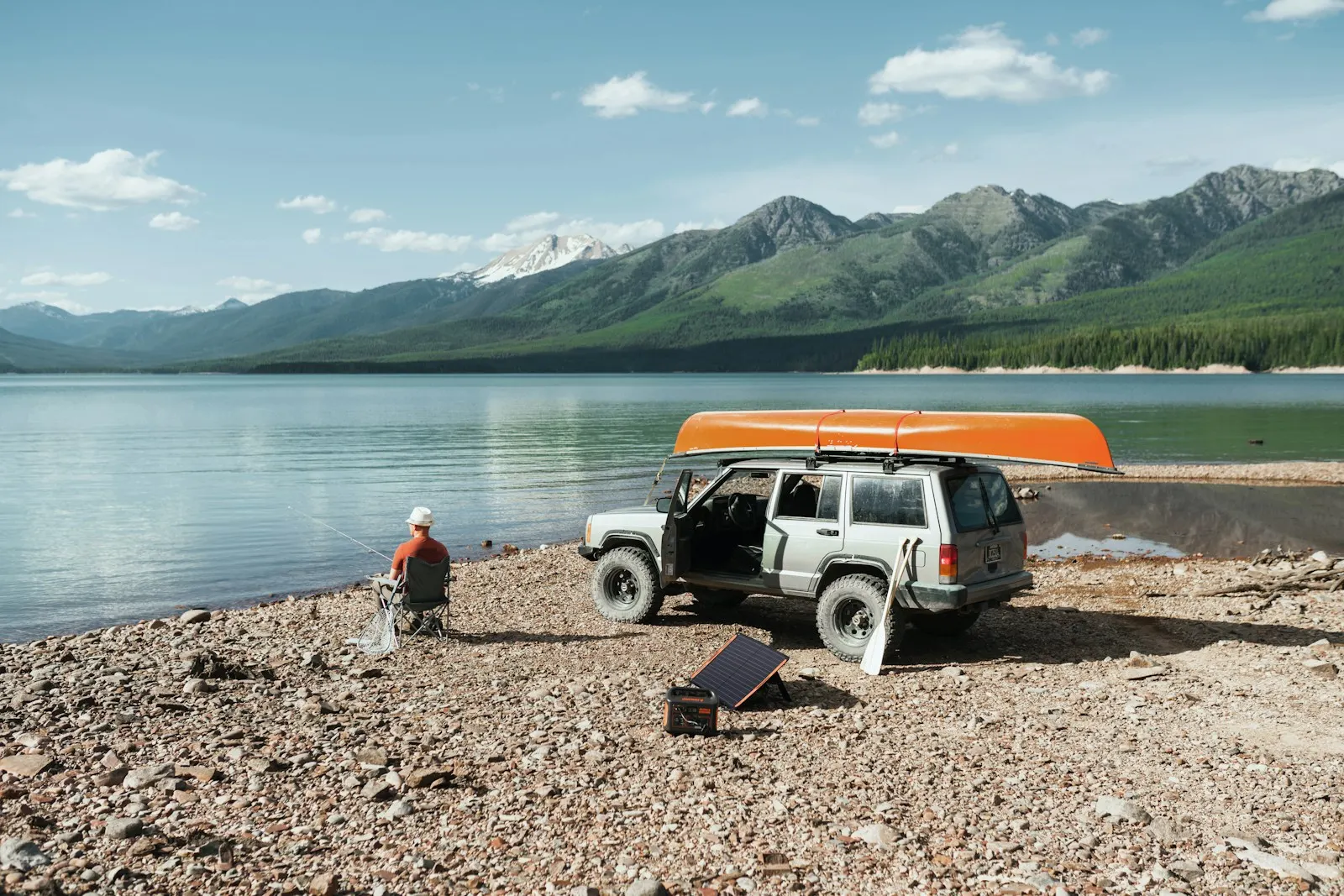
Every overlander running a fridge eventually faces the same fork in the road: buy a portable power station that needs no wiring, or wire a dedicated dual-battery system into the vehicle. A Goal Zero Yeti 1500X Portable Power Station is the no-install path that doubles as home backup power. A dual-battery build around a Renogy 12V 100Ah Lithium Iron Phosphate Battery and a DC-to-DC charger is the permanent solution that charges itself every time you drive. Neither is universally better, and the right answer depends on whether you have committed to one vehicle and how much you camp.
Quick answer
Choose a portable power station like the Goal Zero Yeti 1500X for zero installation, portability between vehicles, and home backup utility. Choose a dual-battery system with a Renogy LiFePO4 battery and a DC-to-DC charger if you have a permanent rig, camp frequently, and want power that recharges automatically while you drive.
This guide contains affiliate links. TrailBaseGear may earn a commission at no cost to you.
The portable power station case
A Goal Zero Yeti 1500X Portable Power Station is a self-contained 1,516Wh unit with a 2,000W AC inverter. You carry it in, plug your gear into it, and recharge it from the wall, the vehicle 12V outlet, or solar. There is no wiring, no DC-to-DC charger, and no risk of incorrectly tapping the vehicle electrical system. For someone who has not committed to a single truck, or who simply does not want to modify a vehicle, that simplicity is the entire argument.
The often-overlooked bonus is home utility. When you are not overlanding, the Yeti sits in the garage as a charged backup that runs a refrigerator, phone charging, and lighting through a grid outage. A vehicle-mounted battery cannot do that. The trade-offs are weight at around 45 pounds and the cargo space the unit occupies, plus a higher cost per usable watt-hour than a bare lithium battery.
Field reference / File TBG-082 power lighting

Goal Zero Yeti 1500X Portable Power Station
A 1,516Wh lithium power station with 2,000W AC output that runs a compressor fridge overnight and charges devices without a dedicated 12V second-battery system.
The dual-battery case
A dual-battery system built on a Renogy 12V 100Ah Lithium Iron Phosphate Battery stores 1.2 kWh usably per battery and, critically, recharges from the alternator through a DC-to-DC charger every time the engine runs. On a trip where you drive between camps, the battery is effectively topped up for free as you go, which is something a power station only matches if you stop to set out solar panels.
Capacity scales cleanly: two 100Ah batteries give you 2.4 kWh, more than the Yeti 1500X, packaged to fit around your cargo area rather than as a single 45-pound box. LiFePO4 chemistry delivers 4,000-plus charge cycles versus around 500 for AGM, so the battery outlasts a decade of weekly use. The cost is install complexity and the requirement for a DC-to-DC charger, which is mandatory because a raw alternator feed damages lithium cells.
Field reference / File TBG-085 power lighting
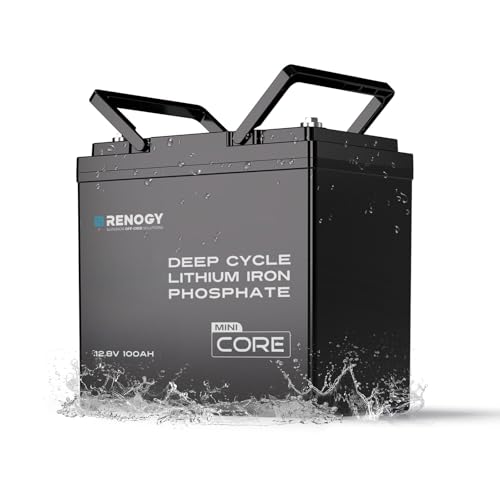
Renogy 12V 100Ah Lithium Iron Phosphate Battery
A 100Ah LiFePO4 deep-cycle battery for permanent dual-battery installations, rated for 4,000 charge cycles with an integrated BMS.
Charging, capacity, and the numbers that matter
Run the math against your actual loads. A Dometic CFX3 55 Portable Compressor Fridge draws roughly 1 to 1.3 kWh per day. A single 100Ah lithium battery or a Yeti 1500X both cover the fridge for about a day without any recharging. The difference is how you replenish: the dual-battery system recharges automatically as you drive, while the power station depends on you plugging in at a campground or deploying solar.
For a one-night camp where you drive in and out, either system is fine. For multi-day remote camps with little driving, the dual-battery alternator charging or a serious solar input becomes the deciding factor. Whatever you choose, never run a fridge directly off the starter battery without isolation, or you risk a dead battery and no engine start in the morning.
Field reference / File TBG-073 portable fridges

Dometic CFX3 55 Portable Compressor Fridge
The overlanding community's default fridge, with a best-in-class VMSO3 compressor, 55-liter interior, and Bluetooth monitoring via the Dometic app.
Why many overlanders run both
The hybrid setup is common for a reason: a dual battery handles the always-on 12V loads like the fridge and lighting that benefit from alternator charging, while a portable power station covers AC appliances and serves as a movable backup you can carry to a picnic table or into the house. You are not locked into one philosophy.
Whichever path you take, the safety layer stays the same. A Garmin inReach Mini 2 Satellite Communicator belongs in the kit regardless of your power system, because no amount of stored energy helps when you need two-way satellite contact beyond cell coverage. Compare the full power lineup at /best/power-lighting/ before you commit to a battery or a station.
Field reference / File TBG-034 power lighting

Garmin inReach Mini 2 Satellite Communicator
A 100-gram satellite communicator with two-way messaging, SOS capability, and GPS tracking on the Iridium network, operable without a cellular signal.
Field reference / File TBG-082 power lighting
Goal Zero Yeti 1500X Portable Power Station
A 1,516Wh lithium power station with 2,000W AC output that runs a compressor fridge overnight and charges devices without a dedicated 12V second-battery system.
Field reference / File TBG-085 power lighting
Renogy 12V 100Ah Lithium Iron Phosphate Battery
A 100Ah LiFePO4 deep-cycle battery for permanent dual-battery installations, rated for 4,000 charge cycles with an integrated BMS.
Field reference / File TBG-073 portable fridges
Dometic CFX3 55 Portable Compressor Fridge
The overlanding community's default fridge, with a best-in-class VMSO3 compressor, 55-liter interior, and Bluetooth monitoring via the Dometic app.
Field reference / File TBG-034 power lighting
Garmin inReach Mini 2 Satellite Communicator
A 100-gram satellite communicator with two-way messaging, SOS capability, and GPS tracking on the Iridium network, operable without a cellular signal.
FAQ
Frequently asked questions
Is a power station or dual battery better for overlanding?+
Neither is universally better. A portable power station like the Goal Zero Yeti 1500X wins on zero installation, portability between vehicles, and home backup use. A dual-battery system with a Renogy LiFePO4 battery wins on automatic alternator charging while you drive, higher scalable capacity, and a cleaner permanent install. Pick the power station for flexibility and the dual battery for a committed, frequently used rig.
Can a portable power station run an overlanding fridge overnight?+
Yes. A Goal Zero Yeti 1500X holds 1,516Wh and runs a Dometic CFX3 55, which draws roughly 1 to 1.3 kWh per day, for around 24 to 30 hours depending on ambient temperature. That covers a single-night camp completely with power left for device charging and lights. For multi-day remote trips, add solar panels to recharge the unit between nights.
Do I need a DC-to-DC charger for a dual battery setup?+
For a lithium secondary battery, yes. A standard alternator produces variable voltage that damages LiFePO4 cells if connected directly. A DC-to-DC charger regulates that voltage to a safe lithium charging profile and is mandatory for the battery to reach its rated 4,000-cycle lifespan. A portable power station avoids this entirely because it has its own internal charging electronics.
How much does each option cost?+
A portable power station like the Yeti 1500X is a higher upfront single purchase but needs no installation. A dual-battery build can start cheaper per usable watt-hour at the battery level, but the DC-to-DC charger, wiring, fuses, and either professional install or your own labor add to the total. Factor in that the power station doubles as home backup, which offsets some of its cost.